About cherry laurel
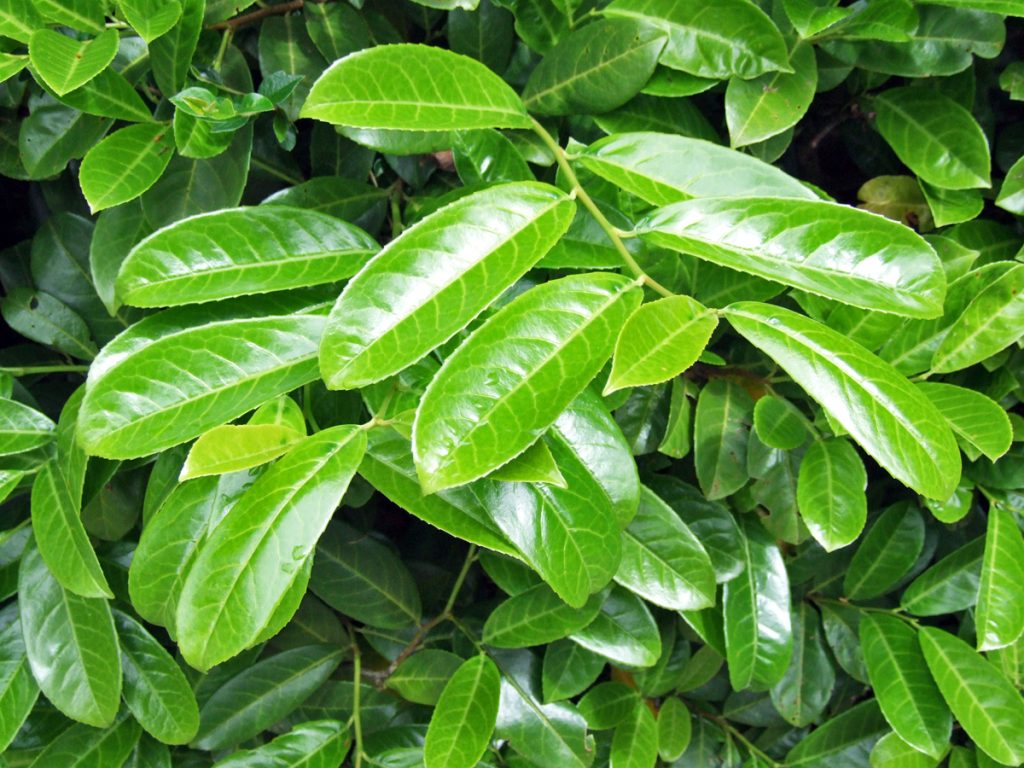
Cherry laurel is a very dense evergreen shrub, or a small to medium tree if left to grow, with large, handsome, glossy green leaves. In spring it carries upright spikes of small white flowers, followed by glossy red cherries that ripen to black. The fruit is not edible.
Despite the name, cherry laurel is not a true laurel. It belongs to the cherry family, Prunus, and gets its common name from its resemblance to bay laurel. Both have been used to make laurel wreaths.
It is native to the regions around the Black Sea, in south-west Asia and south-east Europe, and was planted enthusiastically by the Victorians for its density and toughness. It still makes one of the best large hedges you can grow, and it looks especially good on a big scale.
Growing cherry laurel
Sunlight: full sun or partial shade. It copes with fairly deep shade better than most hedging plants.
Soil: grows best in moist but well-drained, fertile soil. It dislikes waterlogged ground and very shallow chalk.
Aspect: north, east, south or west facing, sheltered or exposed.
Cultivation: easy to grow. Keep new plants watered and fed through their first growing season and they establish quickly.
Growth rate: very fast. Expect 20 to 40cm a year, and up to 60cm in ideal conditions, which makes cherry laurel an economical choice for a quick evergreen screen.
Cherry laurel care
Pruning
As a stand-alone shrub, cherry laurel forms a well-branched framework that needs little or no pruning. As a hedge, trim it to shape one to three times between late spring and late summer, in dry weather. Stop trimming in September to reduce the risk of bare patches over winter.
For the neatest finish use secateurs or hand shears and cut stems rather than slicing through leaves. Hard pruning is best done in March, just before the surge of growth in late April and May, so the plant recovers quickly. Cherry laurel is very tough and regrows even when cut back hard.
The leaves are slow to break down on the compost heap but shred easily. Always check for nesting birds before you cut. Our laurel hedge care guide covers trimming in more detail.
Pests and diseases
Cherry laurel is generally tough, but watch for powdery mildew, leaf spot fungi and bacterial shothole, which leaves small round holes in the leaves. Vine weevil and leaf-mining moths can also damage the foliage. Feeding, watering in dry spells and clearing up fallen infected leaves keeps most problems in check.
Is cherry laurel poisonous?
Yes. The leaves and seeds are toxic if eaten, so keep clippings away from livestock and never cook with them. For cooking you need bay leaves from bay laurel.