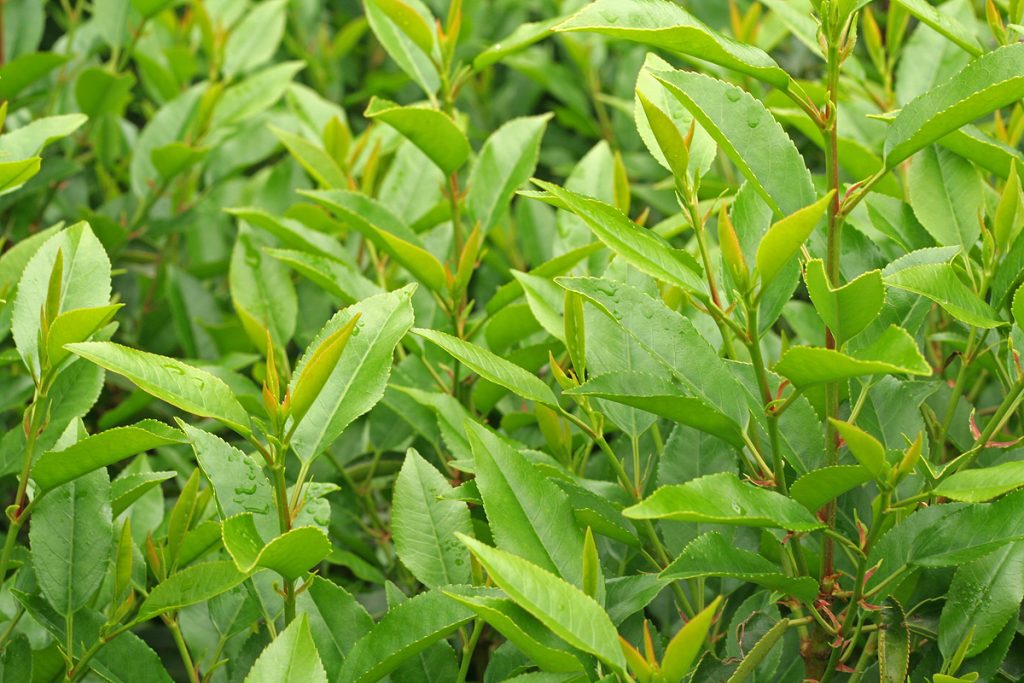
Laurel types

Portuguese Laurel

Prunus lusitanica

A hardier, more refined laurel with smaller glossy leaves, red stems and fragrant summer flowers. It clips beautifully into hedges and topiary.

Also known as Portugal laurel and cherry bay.

Portuguese laurel foliage with red stems

Portuguese laurel at a glance

Growth rate
Fast: up to 45cm a year
Sunlight
Full sun to partial shade
Soil
Moist, well-drained, including chalk
Aspect
Any; best out of strong, cold winds
Hardiness
Fully hardy, more so than cherry laurel
Planting distance
60 to 90cm apart

About Portuguese laurel

Portuguese laurel is an often overlooked evergreen, native to Spain and Portugal, south-west France, Morocco and the Atlantic islands of Macaronesia. In the wild it is uncommon and usually found along mountain streams. It reached Britain in 1648, during the reign of Charles I, and was later embraced by the Victorians, who loved the privacy laurel hedging gave them.

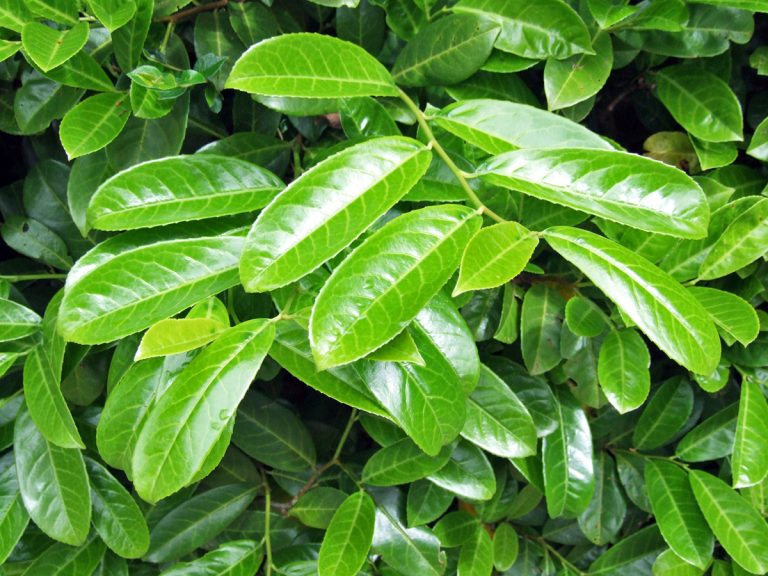
It forms a very dense hedge of dark, glossy green leaves. The leaves are smaller than those of cherry laurel and look a little like bay. New stems are a deep rhubarb red, and the two colours together look warm and rich in winter light.

In early summer it carries spikes of small, fragrant white flowers with a scent a little like hawthorn; both belong to the rose family. Red fruits follow in autumn and darken to purple with age. Birds love them. Portuguese laurel was once planted in woodland where game birds fed, in the belief that the fruit gave the meat a finer flavour.

Portuguese laurel or cherry laurel?

Portuguese laurel is hardier than cherry laurel, less vigorous and less invasive. Many people think its smaller, softer, neatly serrated leaves make it the better-looking plant. Because the leaves resemble bay, it is also a good substitute in colder gardens where bay struggles.

Choose cherry laurel if you want the fastest, cheapest screen. Choose Portuguese laurel for a more refined hedge, a colder or chalky site, or clipped topiary shapes.

Growing Portuguese laurel

Sunlight: full sun or partial shade. It loves sunshine but is happiest in light shade.

Soil: any moist but well-drained, moderately fertile soil, including chalk.

Aspect: north, east, south or west facing. It is hardy, but grows best with some shelter from strong, cold winds.

Cultivation: easy to grow. Water new plants well through their first growing season.

Growth rate: fast, up to 40 to 45cm a year. Left untrimmed it can eventually grow into a tree of around 18 metres.

Portuguese laurel care

Pruning

Trim a Portuguese laurel hedge lightly twice during the summer, with the first cut around June. Secateurs or hand shears give the best finish.

It responds very well to clipping, producing soft topiary shapes that contrast nicely with sharper, smaller-leaved box and holly. Clip shaped plants three times a year, in February, June and October, to keep them crisp. Check for nesting birds before any summer trim.

Pests and diseases

Portuguese laurel is generally trouble-free. Powdery mildew can appear in dry, crowded conditions, and vine weevil and leaf-mining moths may damage the leaves.

Is Portuguese laurel poisonous?

Yes. Like cherry laurel, its leaves and seeds are toxic if eaten, so keep clippings away from livestock and never use the leaves in cooking.
Our picks

Where to buy Portuguese laurel

Portuguese laurel is usually sold pot-grown, as hedging plants or as clipped standards. We link to current Amazon UK listings rather than quoting prices, which change daily.

Hardier choice

Portuguese laurel hedging plants

Smaller, glossier leaves and red stems. Hardier than cherry laurel and clips beautifully.

Best for: Cold, exposed or chalky gardens

Check price on Amazon

Neatest finish

Bypass secateurs

Cut individual stems above a leaf so you avoid the brown, sliced leaves a hedge trimmer leaves behind.

Best for: Trimming large-leaved laurel

Check price on Amazon

Topiary

Portuguese laurel standard

A lollipop-trained Portuguese laurel. A hardy alternative to a bay standard in colder gardens.

Best for: Front doors and formal planting

Check price on Amazon

For bay and standards

Topiary shears

Short, sharp blades for detailed shaping of balls, cones and lollipop standards.

Best for: Shaping bay trees and Portuguese laurel

Check price on Amazon

Big hedges

Cordless hedge trimmer

Quick work of long hedges. Expect some browned leaves on cherry laurel that grow out within weeks.

Best for: Long runs of established hedge

Check price on Amazon

Extra reach

Telescopic hedge shears

Extendable handles let you reach the top of a two metre hedge without a ladder.

Best for: Tops of taller hedges

Check price on Amazon
See all our laurel hedging and tool picks

Choosing laurel: common questions

Container-grown laurel is raised in pots and can be planted any time of year, as long as it is watered through the growing season.

Rootballed laurel is grown in the field and lifted in winter with a ball of soil around the roots, wrapped in hessian until planting. It can only be planted from November to March.

Bare-root laurel is also field-grown and lifted in winter, but with the soil washed off. It is the cheapest option but has a higher failure rate, so plant it quickly and keep the roots moist.

Under ideal conditions you can expect roughly:

  • Cherry laurel (Prunus laurocerasus): up to 60cm (2ft) a year
  • Portuguese laurel (Prunus lusitanica): up to 45cm (18in) a year
  • Bay laurel (Laurus nobilis): up to 40cm (16in) a year when young, slowing as it matures

Ideal means a sheltered, sunny site, fertile soil and plenty of water. Anything less will slow growth down.

All three laurels grow in sun or partial shade. Cherry laurel and Portuguese laurel cope with shade best, which is why they are often used under trees and along shady boundaries. Bay prefers more sun and shelter.

Cherry laurel and Portuguese laurel are toxic if eaten. Their leaves and seeds contain compounds that release cyanide when crushed, so keep clippings away from livestock and never use them in cooking. Avoid leaving large piles of fresh clippings in enclosed spaces such as a car boot.

Bay laurel (Laurus nobilis) is the only one of the three used in the kitchen. See bay leaves for cooking.

More laurel hedging questions answered

Compare other laurels

Cherry laurel hedge with large glossy leaves

Cherry laurel

The classic fast-growing laurel hedge with big glossy leaves. The quickest, most economical evergreen screen.

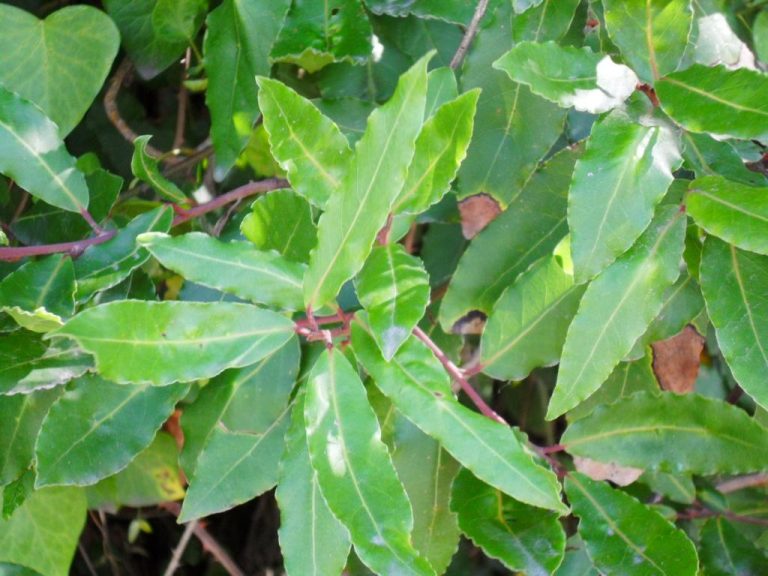
Bay laurel leaves

Bay laurel

The true laurel. Aromatic leaves for cooking, classic topiary standards and a smart, slow-growing hedge.